Syria the Green
Island of Freedom
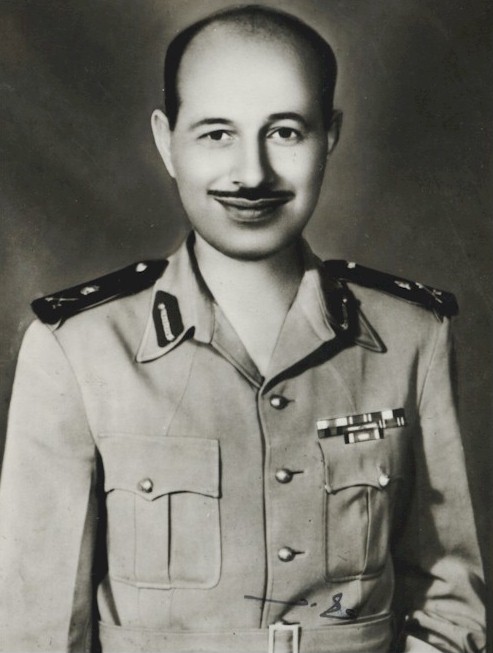
In this book Gen Afif Al Bizri wrote about events, that he personally initiated or was a witness to, during the 50s of the last century. "Syria the Green Island of Freedom" was published as a series of monthly articles, which apeared in the Falestin Al-Thawrah magazine over two years between 1989 and 1990 |
|
Caustic Defeat
for the United States
Synopsis from
chapter 15 (English translation)
|
|
INTRODUCTION
|
|
The New Colonialism
|
|
Syria's Struggle for Independence
|
|
On the Path to Freedom
|
|
The Early Days of Independence
|
|
The First Military Coup
|
|
Revolution is the Destiny of the Weak
|
|
The Shishakly Era
|
|
Colonial Alliances
|
|
The People Emerge on the Field
|
|
Syria Freezes Baghdad Alliance
|
|
USA Advances the Colonialists
|
|
The Patriotic Front
|
|
The struggle of the Syrian people
1. Syrian and Egyptian revolutions get together:the Syrian patriots abandon their doubts towards the Egyptian military dictatorship led by Nasser after the Suez crisis in 1956 and the defeat of the old colonialists. Mahmoud Riad, the Egyptian ambassador to Damascus did not bring about the public opinion switch in favour of the Egyptian regime. 2. Syria the green island of freedom: Joseph Elsop’s lies, journalist at The New York Herald Tribune, 25th of May 1956 issue. The formation of the military group command that controls the Syrian army and supports the Patriotic Front. The speech of Shukri Al Quatli, the Syrian president, Nehru the Indian leader says: Syria is the green island of freedom.
|
|
Storm in a Tea Cup
1. The leading of the struggle is a school and not individualism:the Americans penetrate the national forces and the revolutionary movements and get the benefit of these movements in striking the old British and French colonialists clearing the way to build the new American imperialism. The Americans mobilise the Sadatists (from Al Sadat the Egyptian president after Abdel Nasser) inside the Nasseristic movement in Egypt. The Syrian and the Egyptian national schools lead the struggle in the region.
|
|
The Unity of the Colonialists and their
Servants
1. Al Zarqa Coup d'état: USA seizes the leading role in Baghdad Alliance from Britain. The American convoy to the Middle East, James Richards, encourages King Hussein of Jordan to make Al Zarqa Coup, Egypt supports the coup. Saudi foreign minister Sheik Yousef Yaseen tries to bribe the Syrian army officers in favour of the American interest in the erea. 2. The patriotic leadership in Syria stumbles: the parliament leader Akram Al Horani from Al Ba'ath party manipulates the Patriotic Front. The crises between the civil politicians and the army officers in the Patriotic Front.
|
|
The Syrian- Egyptian Unification
1. The unification is a revolution for freedom and progress: political and historical analysis about the unification of the Arab countries and the role of the European colonialism and the American imperialism in dividing the Arab world. 2. The politicians' hesitation delays the unification: the self-interest of the politicians blocks the unification attempts.
|